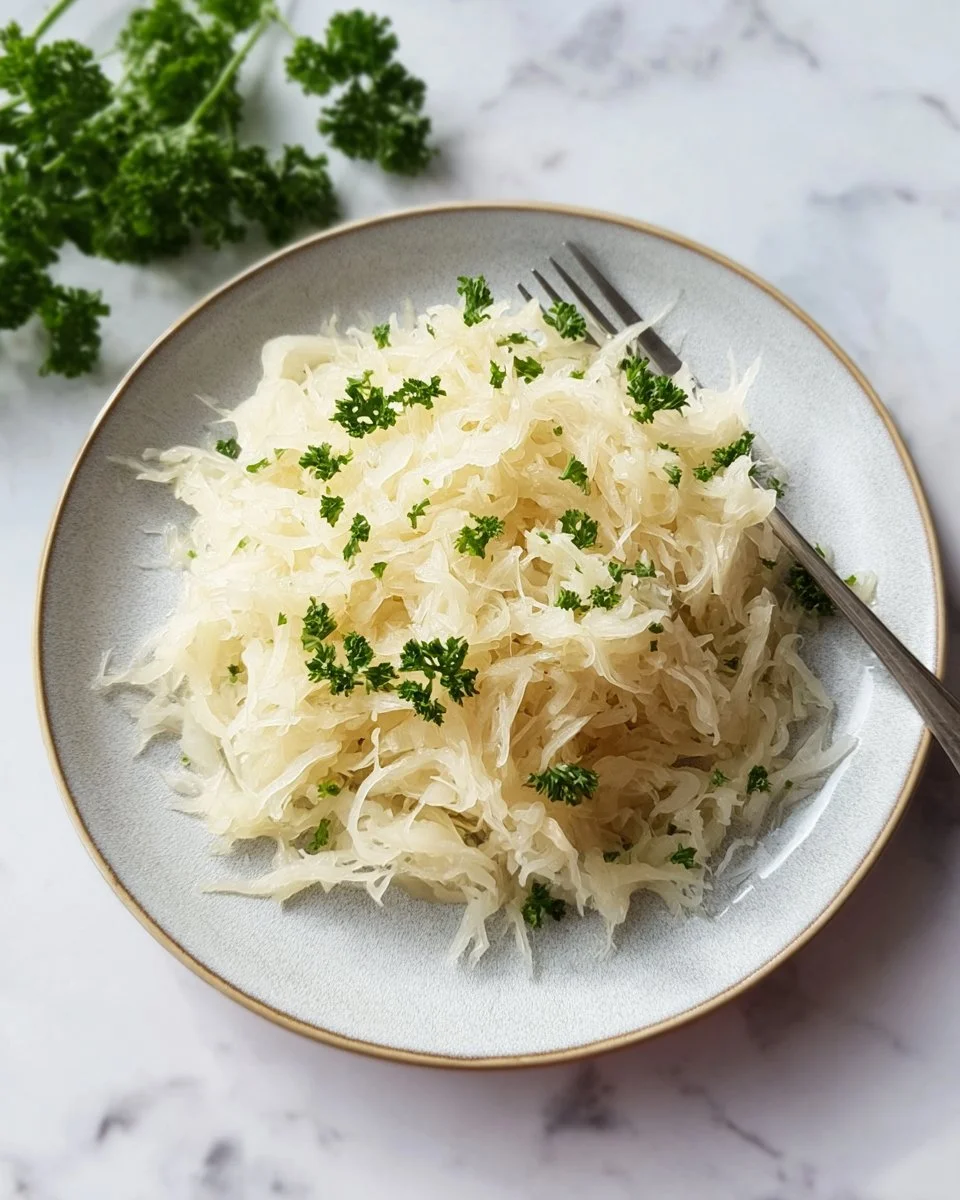
Traditional German Sauerkraut Recipe
Sauerkraut is a beloved dish not just in Germany but all around the world. This fermented food has a long history and is known for its tangy flavor and crunch. Made from green cabbage, sauerkraut is both delicious and incredibly healthy. In this article, we will guide you through making traditional German sauerkraut at home. You’ll find it’s a great option for meal prep, healthy eating, and even weight loss.
WHY YOU WILL LOVE THIS RECIPE
One of the main reasons to love homemade sauerkraut is that it is an easy and healthy version of a popular side dish. This recipe emphasizes fermentation, which offers several health benefits. Fermented foods are known to be great for your gut health, and making sauerkraut at home allows you to control the ingredients more easily than buying pre-packaged versions. Additionally, sauerkraut is low in calories and packed with fiber, making it a fantastic choice if you are focusing on weight loss or maintaining a heart-healthy diet. Plus, since it’s made from just a few simple ingredients, it’s great for meal prep—just make a big batch and enjoy it with various meals throughout the week!
HOW TO MAKE Traditional German Sauerkraut
Making traditional German sauerkraut is a straightforward process that anyone can master. You’ll be surprised by how simple it is to create this flavorful, nutritious side dish right in your kitchen.
EQUIPMENT NEEDED
- A large bowl
- A chef’s knife or mandolin slicer
- A sterilized mason jar for fermentation
- A fermentation weight or a clean glass jar filled with water
- A cloth and rubber band or string for covering the jar
Ingredients You’ll Need
- 1 medium green cabbage (about 2 lbs), shredded
- 1 heaping tbsp sea salt or kosher salt
- 1 tsp caraway seeds (optional)
- Filtered water, if needed
STEP-BY-STEP INSTRUCTIONS
-
Prepare the Cabbage: Remove the outer leaves of the cabbage and set them aside. Shred the cabbage finely using a knife, mandolin, or food processor.
-
Combine Cabbage and Salt: In a large bowl, combine the shredded cabbage and salt. Massage the cabbage with your hands for about 5-10 minutes until it releases its juices and becomes limp. This is essential as the juice will help ferment the cabbage.
-
Pack the Cabbage: Pack the cabbage tightly into a sterilized mason jar, pressing it down firmly to remove any air pockets. Pour the liquid from the bowl over the cabbage. If needed, add filtered water to ensure the cabbage is fully submerged.
-
Add Caraway Seeds: If using, sprinkle caraway seeds between the layers of cabbage for added flavor.
-
Top and Weigh: Place one of the reserved outer leaves on top of the shredded cabbage to keep it submerged. Use a fermentation weight or a clean glass jar filled with water to weigh it down.
-
Cover the Jar: Cover the jar with a cloth and secure it with a rubber band or string. This allows gases to escape while keeping dust and insects out.
-
Ferment: Store the jar at room temperature, away from direct sunlight, for 1-3 weeks. Check daily to ensure the cabbage remains submerged and skim off any scum that forms on the surface.
-
Taste Test: Start tasting the sauerkraut after one week. When it reaches your desired tanginess, transfer it to airtight containers and store it in the refrigerator.
HOW TO SERVE Traditional German Sauerkraut
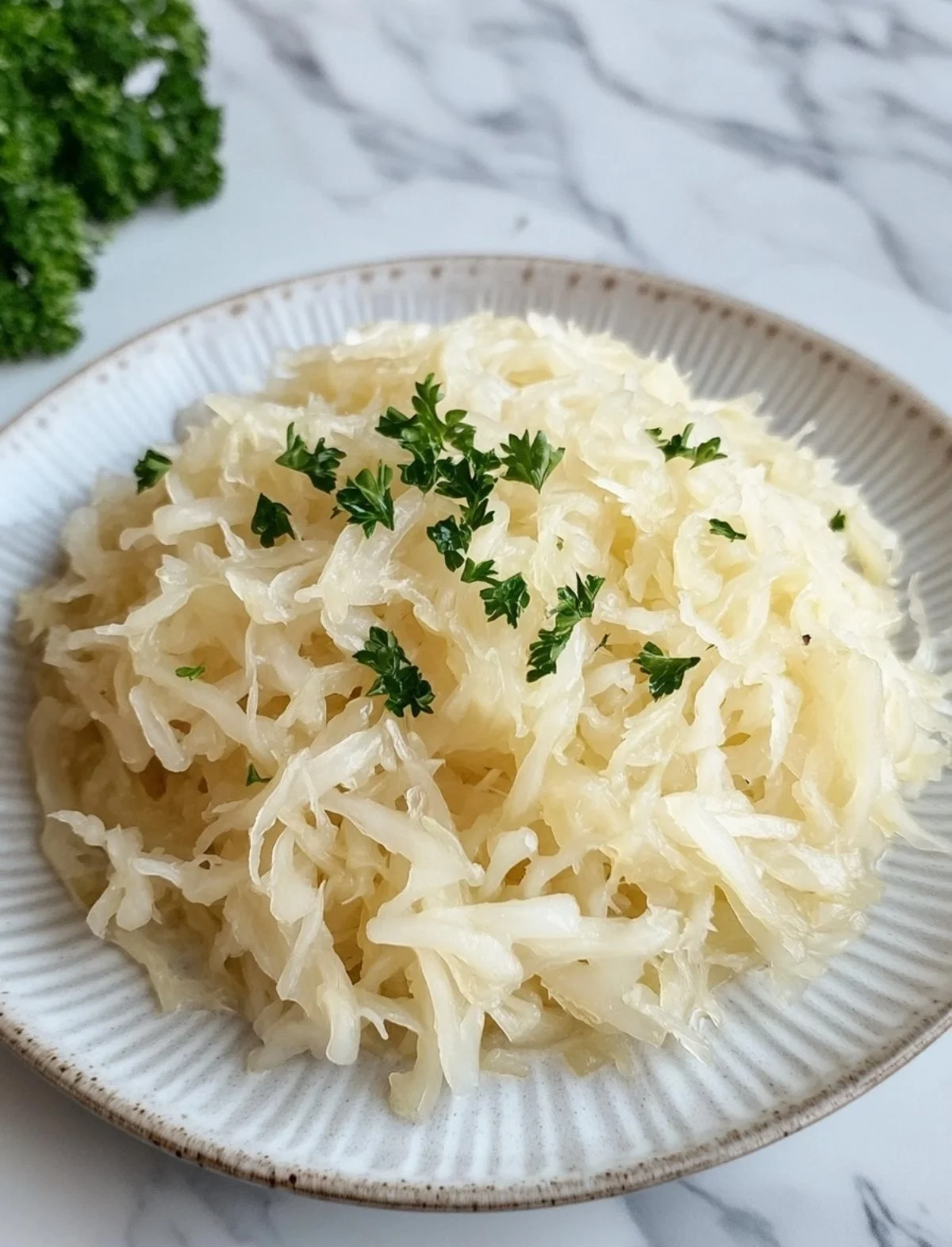
Serving sauerkraut can be as versatile as your creativity allows. It’s excellent as a side dish with proteins like chicken, pork, or turkey. For a balanced meal, use sauerkraut to top a grilled sausage or mix it into a salad. Portion control is essential, so aim for about ½ cup per serving to keep it light and nutritious.
You can also enjoy sauerkraut as a topping for whole-grain wraps or in grain bowls, which is a great option for meal prep.
STORAGE & FREEZING : Traditional German Sauerkraut
Homemade sauerkraut can last for several months in the refrigerator, making it ideal for meal prep. Store it in airtight containers to maintain its crispness and flavor. While freezing is not commonly suggested, if you must, ensure the sauerkraut is in a freezer-safe container and thaw it slowly in the refrigerator when you’re ready to use it.
SERVING SUGGESTIONS
Pair your traditional sauerkraut with:
- Grilled chicken or turkey breast for a heart-healthy meal.
- Quinoa or brown rice as a nutritious, fiber-rich side.
- Roasted veggies for a balanced and colorful plate.
VARIATIONS
Healthier Version
Adding more vegetables like shredded carrots or diced bell peppers can increase the nutrient density of your sauerkraut while keeping it low-calorie and gluten-free.
High-Protein or Low-Carb Version
You can make a high-protein meal by serving sauerkraut with grilled chicken or turkey, or by mixing it with some shredded cheese for an extra protein boost while keeping the meal low-carb.
Air Fryer Version
If you want to incorporate sauerkraut in an air fryer recipe, consider making sauerkraut and sausage bites. Simply mix cooked sausage with sauerkraut, form them into small balls, and air fry until crispy. This combination creates a great high-protein snack that is also diabetic-friendly.
FAQs
1. Is sauerkraut good for digestion?
Yes, sauerkraut is a fermented food and is rich in probiotics, which are great for gut health and digestion.
2. How long does homemade sauerkraut last?
Homemade sauerkraut can last up to several months when stored properly in the refrigerator in airtight containers.
3. Can I eat sauerkraut on a low-carb diet?
Yes! Traditional sauerkraut is low in carbs, making it suitable for low-carb diets as long as it is not served with high-carb side dishes.
4. What is the nutritional value of sauerkraut?
Sauerkraut is low in calories and high in fiber, making it filling and nutritious. It also contains essential vitamins and minerals, especially Vitamin C and K.
MAKE-AHEAD TIPS FOR Traditional German Sauerkraut
Making sauerkraut is perfect for meal prep since it can be made in large batches and enjoyed over time. You can prepare a big jar and let it ferment while you focus on other meals. Once it’s ready, have it on hand to complement various dishes throughout the week. Sauerkraut can be a quick side dish, a topping, or even a component in your meal prep containers, saving you time and effort.
Adding this traditional German sauerkraut to your meals not only boosts nutrition but accentuates flavors in delightful ways. Enjoy the process of making this fermented treat, and relish the mouthwatering results!
Traditional German Sauerkraut
Ingredients
Method
- Remove the outer leaves of the cabbage and set them aside. Shred the cabbage finely using a knife, mandolin, or food processor.
- In a large bowl, combine the shredded cabbage and salt. Massage the cabbage with your hands for about 5-10 minutes until it releases its juices and becomes limp.
- Pack the cabbage tightly into a sterilized mason jar, pressing it down firmly to remove any air pockets. Pour the liquid from the bowl over the cabbage.
- If needed, add filtered water to ensure the cabbage is fully submerged.
- If using, sprinkle caraway seeds between the layers of cabbage for added flavor.
- Place one of the reserved outer leaves on top of the shredded cabbage to keep it submerged. Use a fermentation weight or a clean glass jar filled with water to weigh it down.
- Cover the jar with a cloth and secure it with a rubber band or string.
- Store the jar at room temperature, away from direct sunlight, for 1-3 weeks. Check daily to ensure the cabbage remains submerged and skim off any scum that forms on the surface.
- Start tasting the sauerkraut after one week. When it reaches your desired tanginess, transfer it to airtight containers and store it in the refrigerator.